
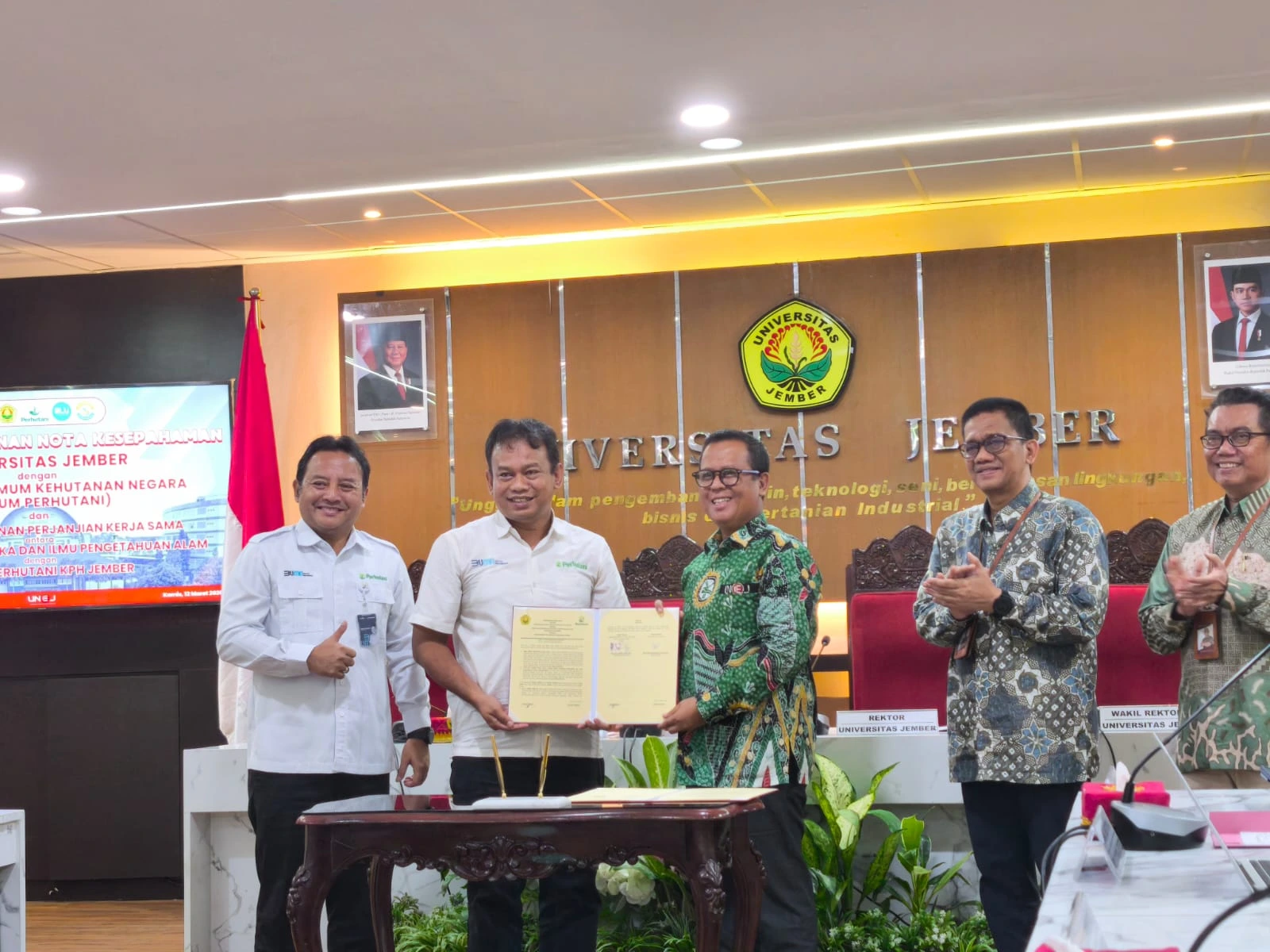
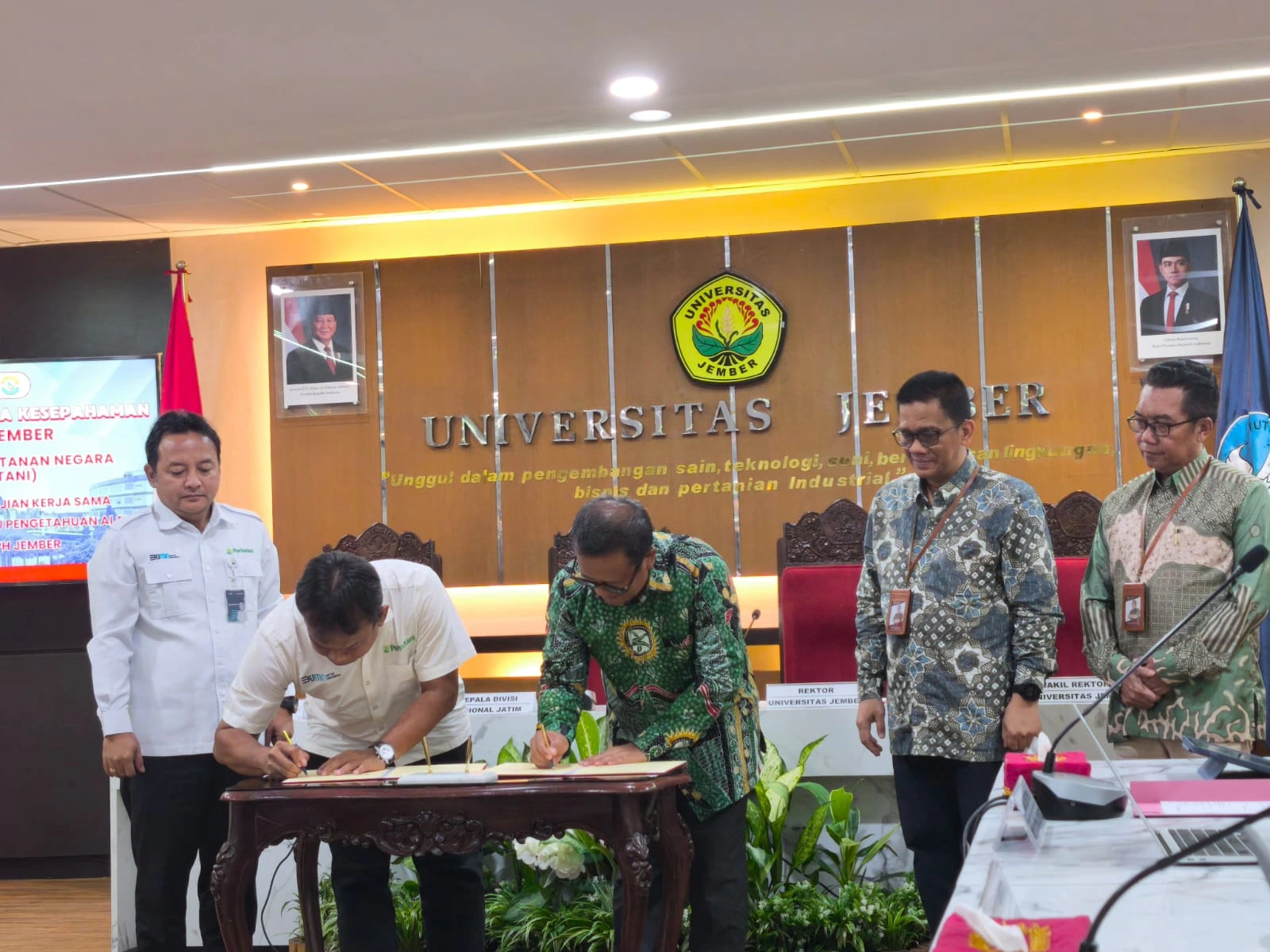
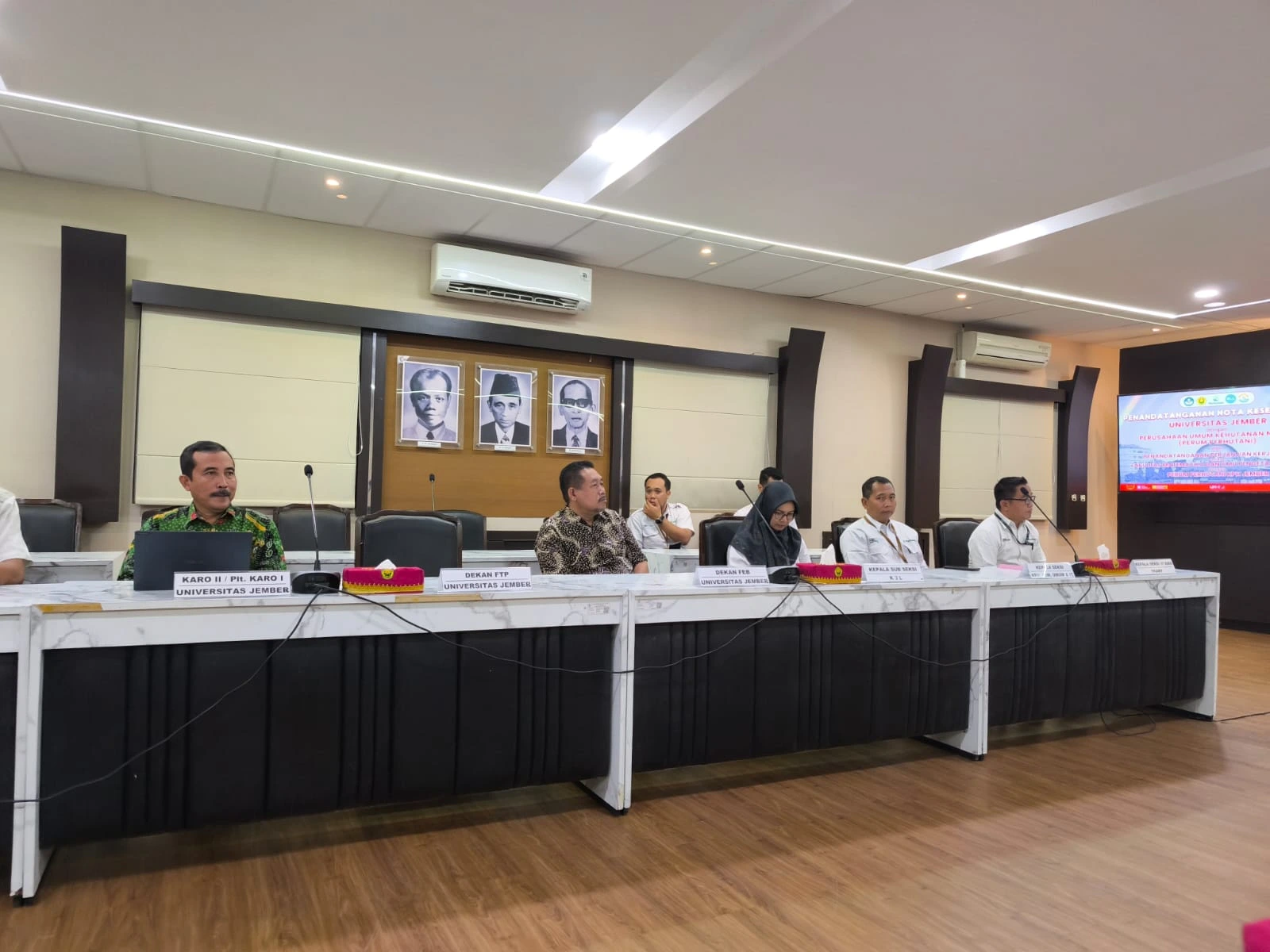
 The Faculty of Mathematics and Natural Sciences (FMIPA) of the University of Jember and the Perhutani Forest Management Unit (KPH) of Jember officially signed a Cooperation Agreement (PKS) as a follow-up to the Memorandum of Understanding (MoU) between the East Java Regional Division of Perhutani and the University of Jember (March 12). The collaboration between the Faculty of Mathematics and Natural Sciences (FMIPA) of the University of Jember and Perhutani has been ongoing since 2017. At that time, a team of FMIPA lecturers, along with the Perhutani KPH of the Jember region, developed a High Conservation Value (HCV) document. This was followed by regular training for Perhutani field staff, facilitated by the FMIPA lecturer team, to increase their capacity in collecting and analyzing biodiversity and environmental quality data.
Various collaborative activities have been carried out over the past few years, but they do not yet have a formal legal basis in the form of a cooperation agreement. Since early 2026, the Faculty of Mathematics and Natural Sciences (FMIPA) of the University of Jember (UNEJ) and the State Forestry Company (Perhutani) have initiated a Memorandum of Understanding (MoU) to strengthen their partnership in facilitating the implementation of the Three Pillars of Higher Education (Tri Dharma Perguruan Tinggi). The MoU was signed today by the Administrator of the Perhutani Forest Management Unit (KPH) in Jember, Eko Teguh Prasetyo, and the Dean of the Faculty of Mathematics and Natural Sciences (FMIPA) of UNEJ, Prof. Drs. Dafik, M.Sc., Ph.D., as a commitment to strengthening the implementation of the Three Pillars of Higher Education, which encompass education, research, and community service within the Perhutani KPH Jember work area.
The collaboration also expanded in 2020 through data collection and analysis of flora and fauna biodiversity in the Erek-Erek Geoforest area of the West Banyuwangi KPH. Furthermore, in 2024, a team of FMIPA lecturers and a team from Perhutani conducted biodiversity research in the Tancak and Sumberjati areas, the results of which were presented at an international seminar. As an initial implementation of the collaboration, in 2026, UNEJ Faculty of Mathematics and Natural Sciences students undertook their first internship program at the Perhutani Forest Management Unit (KPH) in Jember. Eight students participated in the Impact Internship program, which is part of the Impactful Diktisaintek program. It includes student internships and independent study programs integrated with partner needs and learning outcomes.
“Through this collaboration, students and lecturers have broader opportunities to conduct research and academic activities directly in forest areas, resulting in scientific studies that benefit sustainable forest management,” said Prof. Dafik. The scope of the collaboration includes inventorying and monitoring biodiversity in forest areas, joint research related to sustainable forest management, student internships, independent studies, and the exchange of scientific data. This collaboration also encompasses institutional strengthening, empowerment of forest communities, and the development of nature tourism and environmental education.
 |
 |
Perhutani will provide forest areas as field locations for students and provide support from technical mentors in the field. Meanwhile, UNEJ Faculty of Mathematics and Natural Sciences will provide academic support through mentoring and funding for student activities involved in the program. Eko Teguh Prasetyo, Administrator of the Jember Forestry Management Unit (KPH Perhutani), stated that collaboration with universities will strengthen science-based forest management. “This collaboration is expected to produce innovations and scientific studies that support sustainable state forest management and also benefit communities surrounding forest areas,” he said.
This cooperation agreement is valid for two years, from March 12, 2026, to March 11, 2028. During this period, various activities such as research, field practice, student internships, and other scientific activities will be carried out as part of the collaboration. Through this synergy between academia and state forest managers, it is hoped that more applicable scientific knowledge will be developed, while also supporting biodiversity conservation efforts and empowering communities surrounding forest areas.