
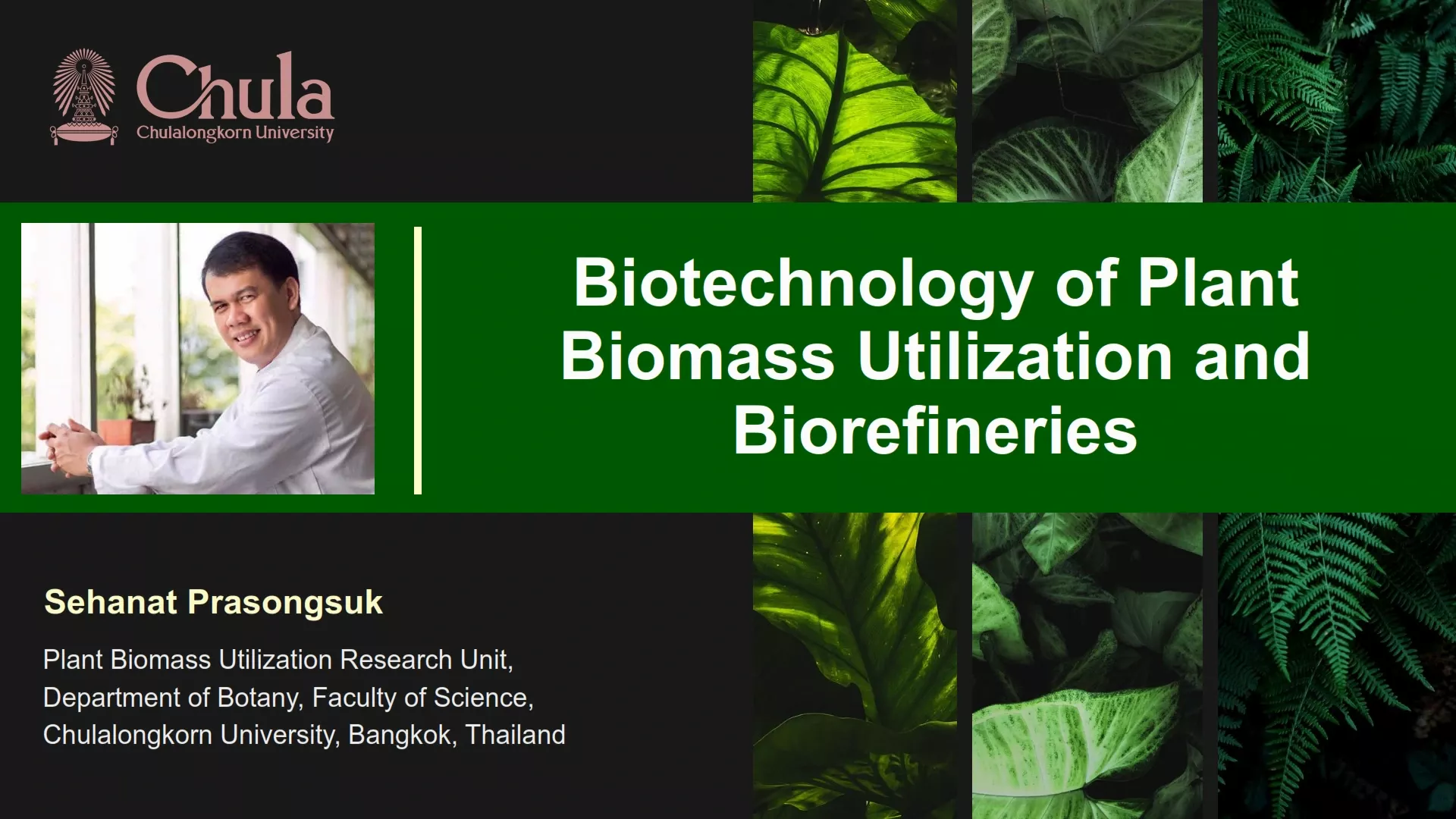
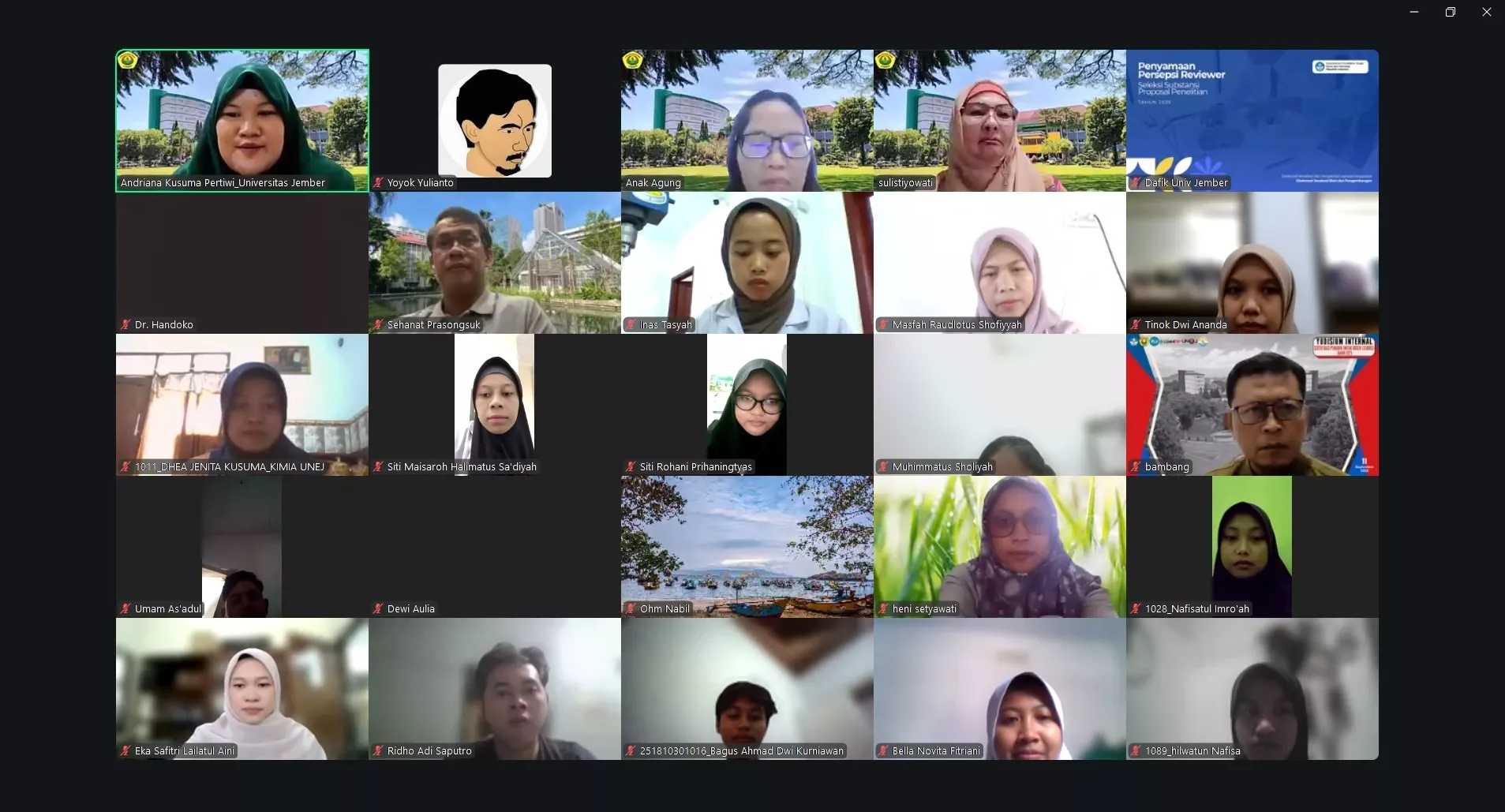
 The Faculty of Mathematics and Natural Sciences (FMIPA) at the University of Jember, through the Department of Chemistry, held Chemistry Guest Webinar Series #1 (6/3). The theme was the development of plant biomass biotechnology and prebiotic development. The event featured Prof. Dr. Sehanat Prasongsuk from the Department of Botany, Faculty of Science, Chulalongkorn University, Thailand. In his opening remarks, Prof. Drs. Dafik, M.Sc., Ph.D., Dean of FMIPA UNEJ, stated that plant biomass utilization and biorefinery development are important topics in supporting sustainable resource management. He believes that research in this area plays a significant role in driving the development of bioeconomy-based industries in the future.
“Plant biomass utilization and biorefinery development are highly relevant to global efforts to develop environmentally friendly technologies and sustainable resources to support future industries,” he said. The Dean hopes that FMIPA can broaden the academic horizons of its academic community while strengthening international research collaboration networks, particularly in the fields of plant biomass biotechnology and the development of prebiotic-based health products. “We hope this activity will not only enrich academic perspectives but also serve as the first step in realizing research collaborations that will have a real impact on society,” he concluded.
In his presentation, Prof. Dr. Sehanat Prasongsuk explained that plant biomass, composed of cellulose, hemicellulose, and lignin, can be utilized through a biotechnological approach using microorganisms and enzymes to produce various value-added products. “Plant biomass is a very abundant resource and has great potential to be utilized as bioenergy, biopolymers, and various environmentally friendly biotechnology products,” he explained. She also emphasized the importance of international collaboration in developing research in the field of biotechnology. “Research collaboration between universities is crucial to accelerating innovation, for example through joint research and collaborative scientific publications,” he added.
Furthermore, the second speaker, Prof. Dr. A. A. I. Ratnadewi, S.Si., M.Si., a lecturer in the Department of Chemistry, Faculty of Mathematics and Natural Sciences, University of Jember, presented research results on the production, characterization, and application of new-generation prebiotics. He explained that prebiotic compounds have great potential to support human health while opening up opportunities for innovation in the development of functional food products. “Prebiotics play an important role in maintaining the balance of gut microbiota and have the potential to be developed into various functional food products that are beneficial to public health,” she said. This activity was moderated by Prof. Dra. Hari Sulistiyowati, M.Sc., Ph.D., a professor in the field of ecological evaluation, who led the scientific discussion between the speakers and participants.
 |
 |
 |
 |