
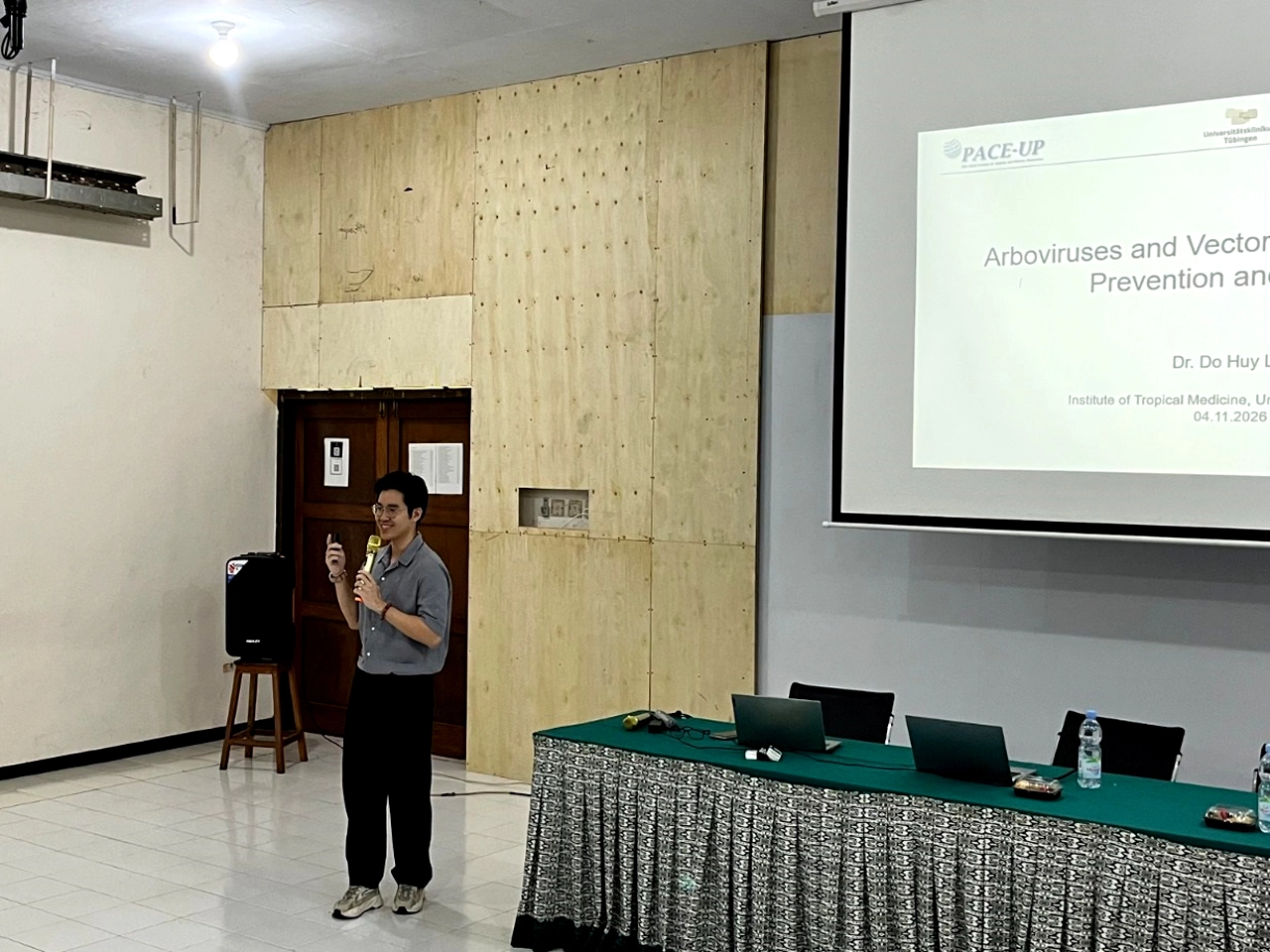
 The Department of Biology at the FMIPA UNEJ, provided an international-standard learning experience through a guest lecture titled “Beyond Mosquito Identification: Exploring Vector Biology, Molecular Surveillance, and AI in Disease Prevention” (4/11). Dr. Do Huy Loc from the Institute of Tropical Medicine at the University of Tübingen, Germany, guided students through research on vector biology, molecular surveillance, and the role of artificial intelligence in addressing the challenges posed by mosquito-borne diseases. The session was moderated by Dr. Vendi Eko Susilo and opened with remarks from the Head of the Department of Biology at FMIPA UNEJ, Dr. Asmoro Lelono.
In his presentation, Dr. Do Huy Loc invited participants to view mosquitoes not merely as disease-carrying insects, but as part of an ecosystem deeply influenced by environmental changes. “Rising temperatures can affect the transmission dynamics of viruses such as dengue, Zika, and chikungunya, making vector surveillance a crucial step in the early detection of potential outbreaks,” he explained. Furthermore, he discussed biological control approaches specifically the use of *Wolbachia* and Bacillus thuringiensis (Bt) emphasizing that any such strategy must account for the biological characteristics of the vectors and their ecological impact to ensure long-term sustainability. Continue reading