
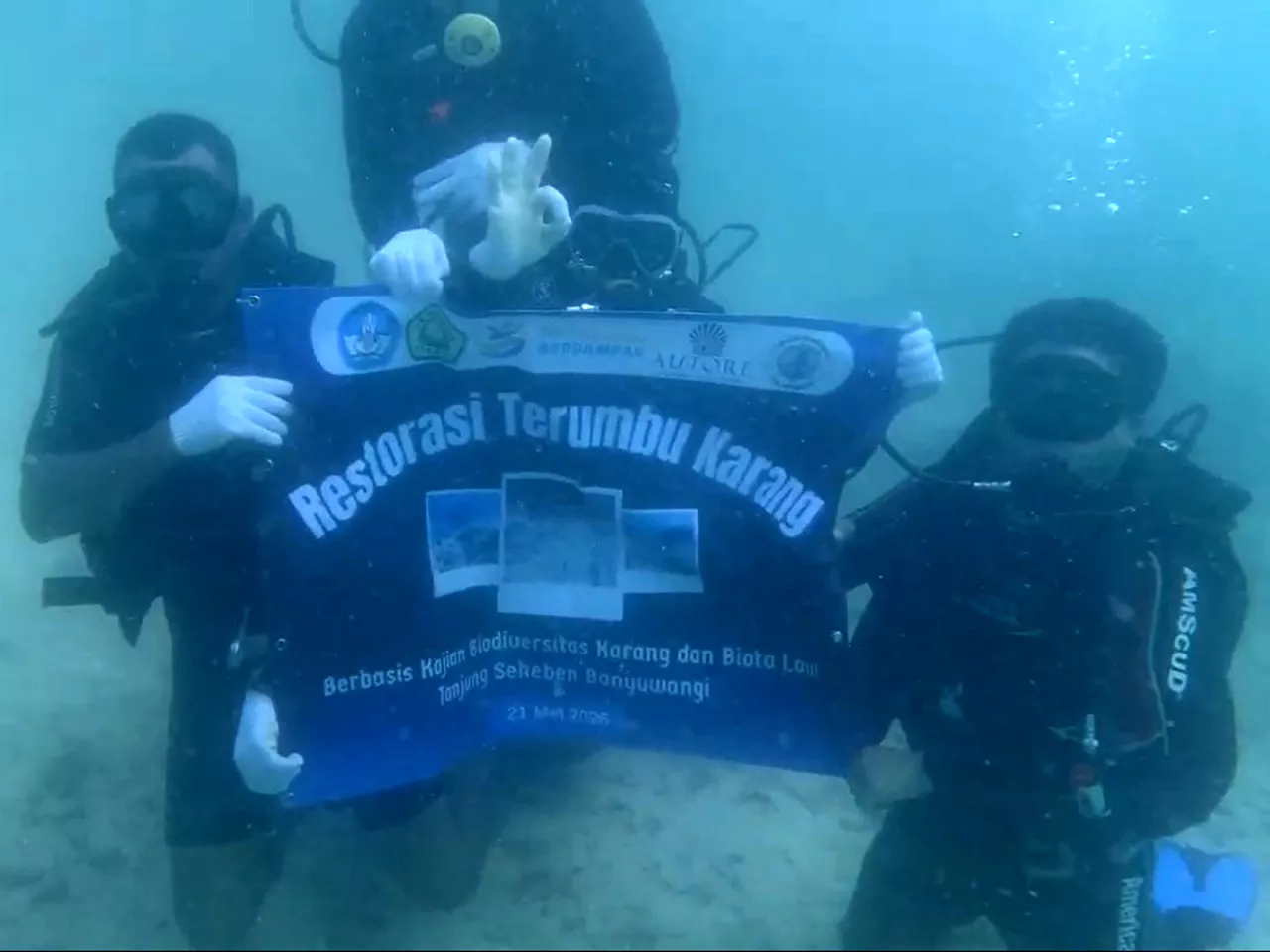
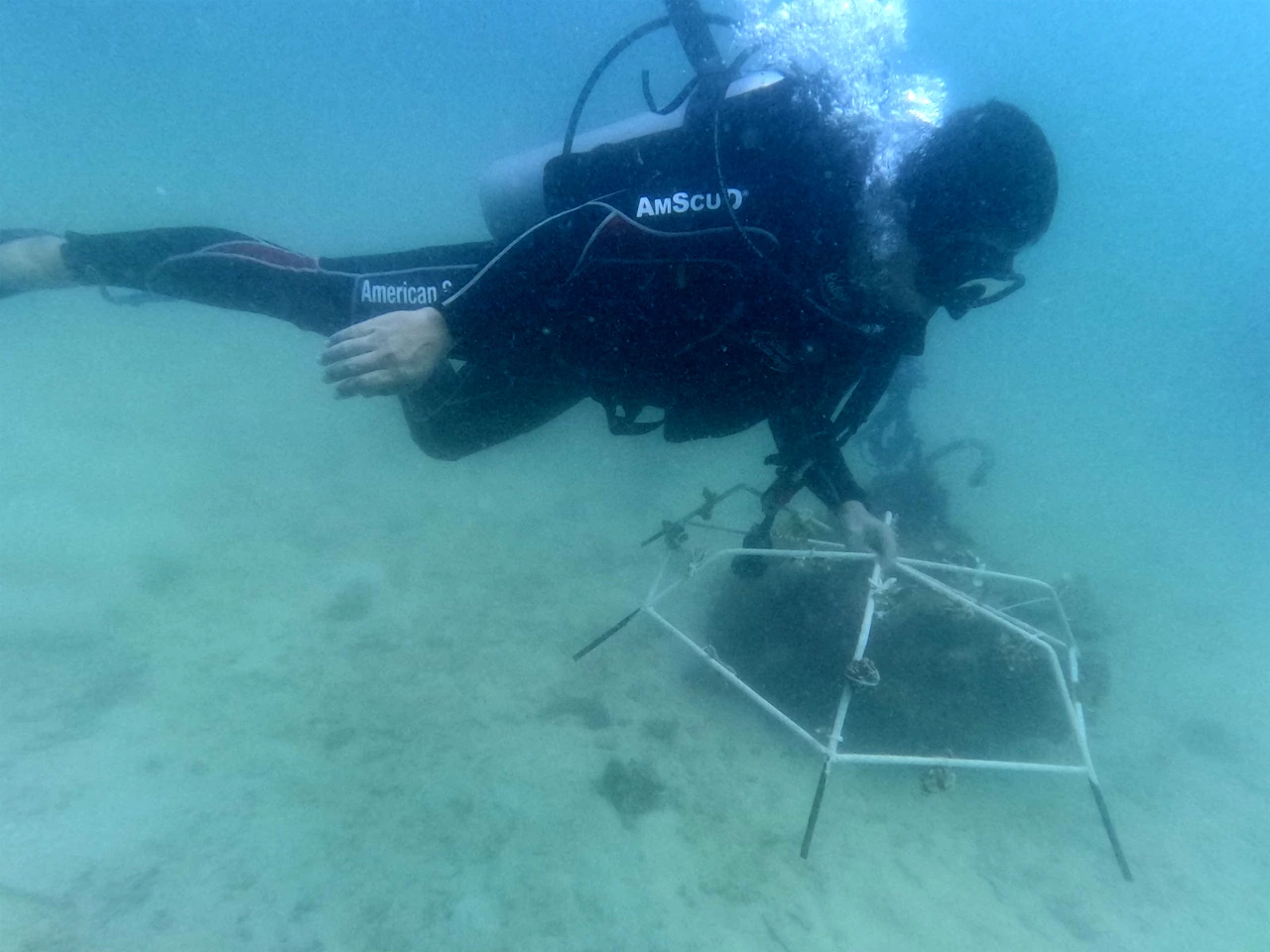
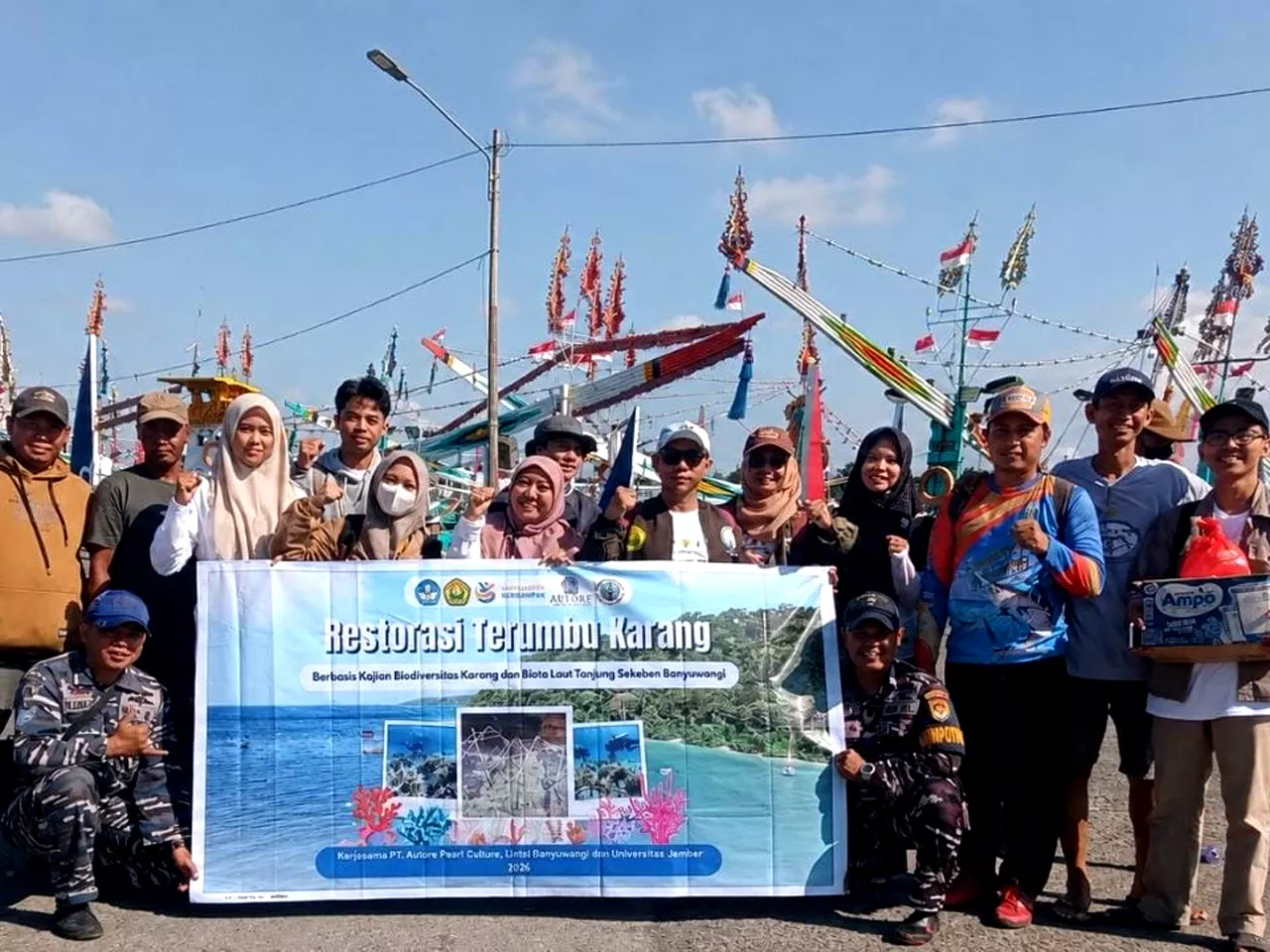
 Marine ecosystem conservation efforts initiated by the FMIPA UNEJ in partnership with PT Autore Pearl Culture are yielding promising results. Two months after the planting of 750 coral reef seedlings in the waters of Tanjung Sekeben (Tembokrejo, Muncar, Banyuwangi Regency) specifically in May 2026 the underwater ecosystem is beginning to recover. Various species of reef fish have returned to inhabit the transplantation area, serving as an indicator of improved habitat quality. This program is also supported by the Banyuwangi Naval Base, the Muncar Fishing Port Technical Implementation Unit (UPT) of the East Java Marine and Fisheries Agency, and local fishermen groups.
Dr. Ratna Dewi Syarifah, S.Pd., M.Si., head of the FMIPA UNEJ Coral Reef Restoration Team, explained that field monitoring results indicate an excellent survival rate for the coral reef seedlings. “We are grateful to see the positive developments at the transplantation site. The reappearance of various reef fish species indicates that the transplantation method we implemented is accelerating the natural habitat recovery process. This demonstrates that collaboration among universities, the industrial sector, the government, and the community can deliver tangible impacts on the sustainability of coastal ecosystems,” she stated.
This restoration program represents a multi-stakeholder synergy involving PT Autore Pearl Culture, the Banyuwangi Naval Base, the Muncar Fishing Port UPT, the East Java Marine and Fisheries Agency, and local fishermen groups. The collaboration focuses not only on coral reef planting but also encompasses monitoring activities, community education, and raising awareness about the importance of preserving marine ecosystems, which sustain coastal life and ensure sustainable fishery resources.
Through this initiative, FMIPA UNEJ reaffirms its commitment to fulfilling the “Three Pillars of Higher Education” by conducting research and community service that yield direct environmental benefits. The initial success of the coral reef restoration program in Banyuwangi is expected to serve as a model for collaborative conservation applicable across Indonesia’s coastal regions, while simultaneously strengthening FMIPA UNEJ’s role as an institution actively providing scientific solutions for natural resource preservation and sustainable development.
 |
 |
 |
 |