
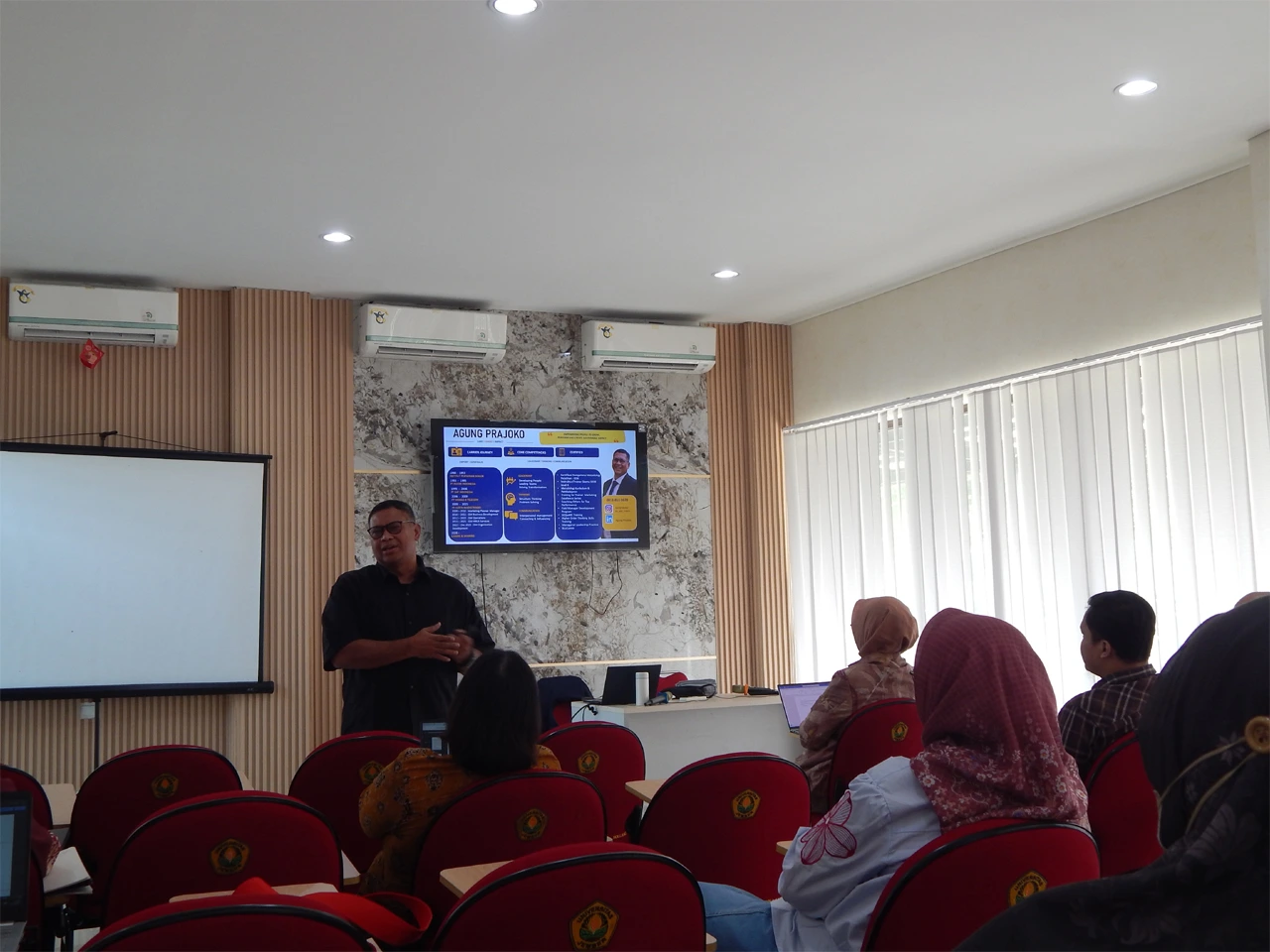
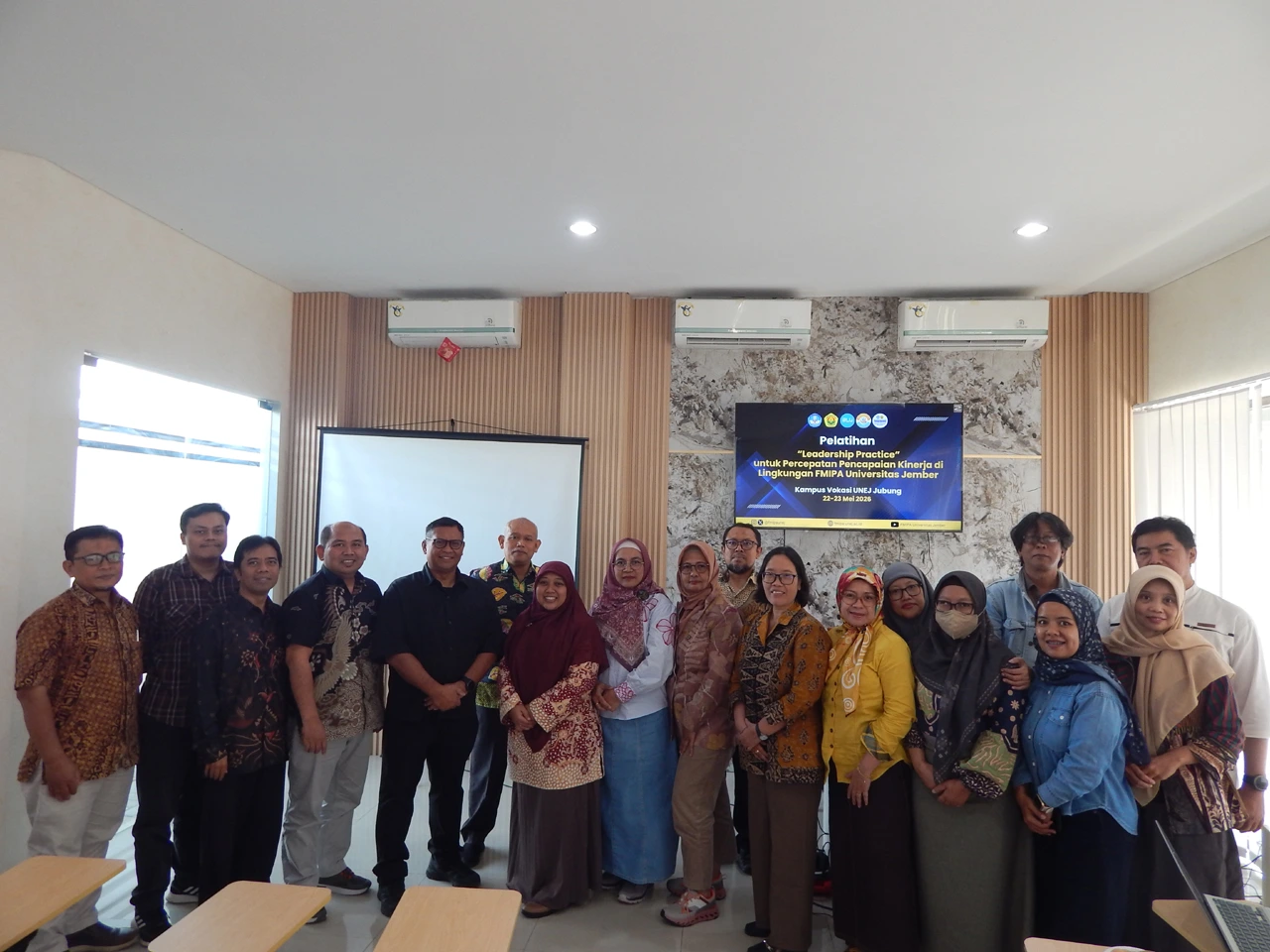
 FMIPA UNEJ held a “Leadership Practice” training to accelerate performance achievement within the Faculty at the UNEJ Jubung Campus (June 22-23). Led by Agung Prajoko, President Director of PT. Care & Share Indonesia, the training was designed to strengthen human resource readiness to face the challenges of the workplace and technological transformation in the artificial intelligence era. The training, themed “MATCH FITNESS” Management Practice: Building Thinking, Connection, and Readiness in the AI Era, focused on developing self-awareness, thinking skills, and impactful communication skills. Participants, comprising the leadership of the Faculty, including the Vice Dean, Head of Study Programs (KPS), Head of Laboratory, and Vice Coordinator, were invited to participate interactively, reflect on self-development, and develop a self-improvement grid to enhance personal and professional competencies.
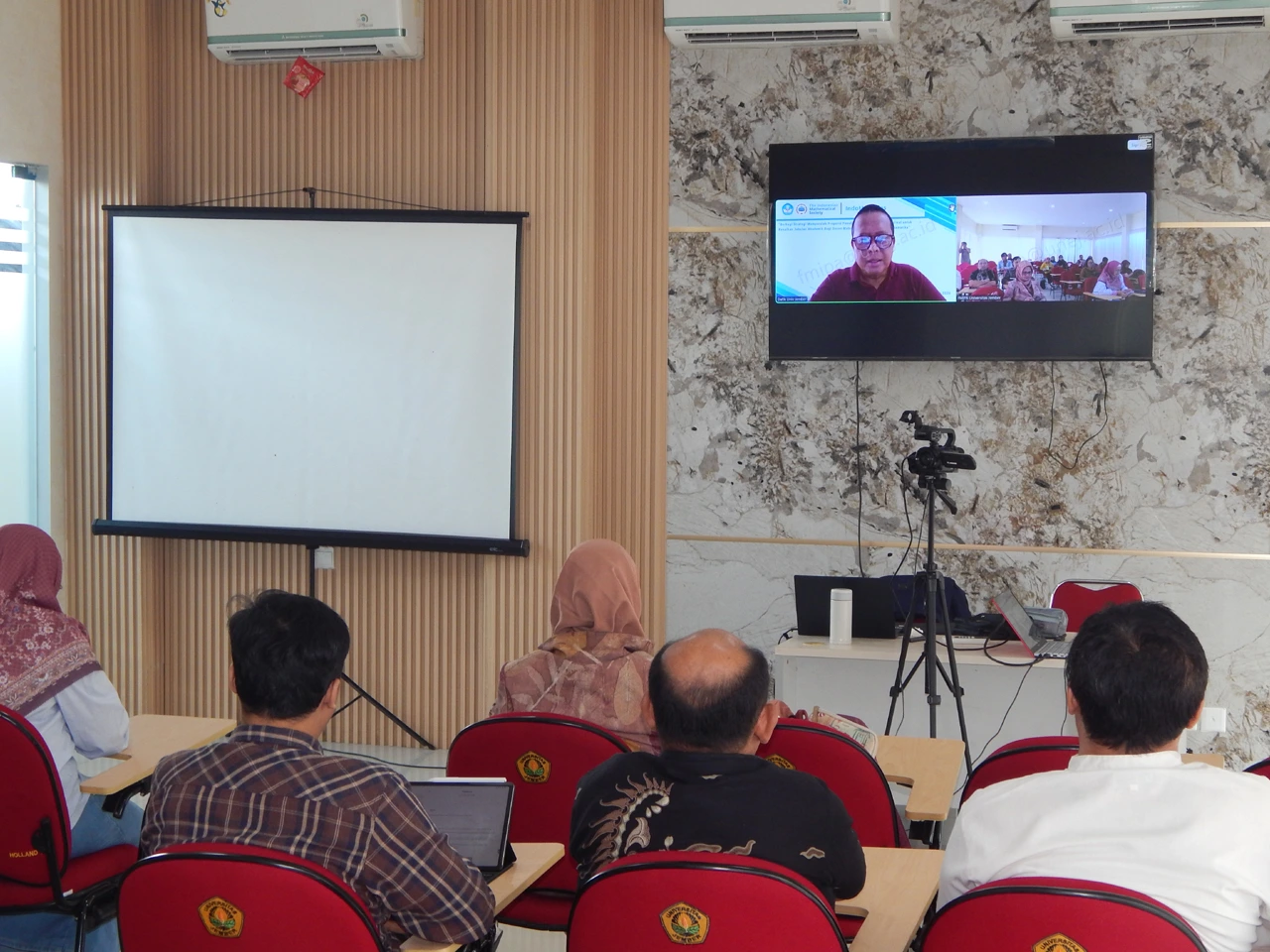
In his remarks, Dean Prof. Drs. Dafik, M.Sc., Ph.D. emphasized that universities must be able to prepare graduates and educators who are adaptive to changing times, particularly the increasingly rapid development of artificial intelligence. “The era of artificial intelligence is not to be feared, but must be understood and utilized wisely. The Faculty of Mathematics and Natural Sciences (FMIPA) at UNEJ continues to encourage its academic community to develop critical thinking skills, strong communication skills,
and readiness to face changes in the world of work,” said Prof. Dafik. Through this training, the Dean hopes participants will be able to improve their personal qualities while building an adaptive and innovative work culture.
This activity also encouraged participants to reflect on their own expectations, technological readiness, adaptability, and strengthening work-life balance as a crucial part of future career development. “In the era of artificial intelligence, humans must still possess skills that cannot be replaced by machines, such as empathy, creativity, and the ability to understand others,” explained Agung Prajoko. In an engaging presentation, the three Pillars of Match Fitness—Self-Awareness, Thinking Quality, and Communication Impact—were presented interactively and through two-way communication with participants.
Self-Awareness in “Pillar Match Fitness” refers to the ability to recognize one’s strengths, weaknesses, goals, and how one adapts to changes in the era of artificial intelligence. Participants were encouraged to understand their potential, improve their work readiness, and build better communication and professionalism. “Thinking Quality is the ability to think critically, adaptively, and find solutions in facing changes and work challenges in today’s era of artificial intelligence,” explained Agung Prajoko. The final pillar, Communication Impact, is the ability to convey messages and build relationships that can positively influence others.
 |
 |
 |
 |
Agung Prajoko also discussed the phenomenon of using artificial intelligence in education and the workplace. “There are risks and opportunities in using artificial intelligence by students to complete assignments. Artificial intelligence can also explore how assignments and the learning process can be made more meaningful,” he explained. Work productivity, priority management, and developing self-development steps through the methods of “keep doing, stop doing, start doing, do more, and do less” were also discussed.
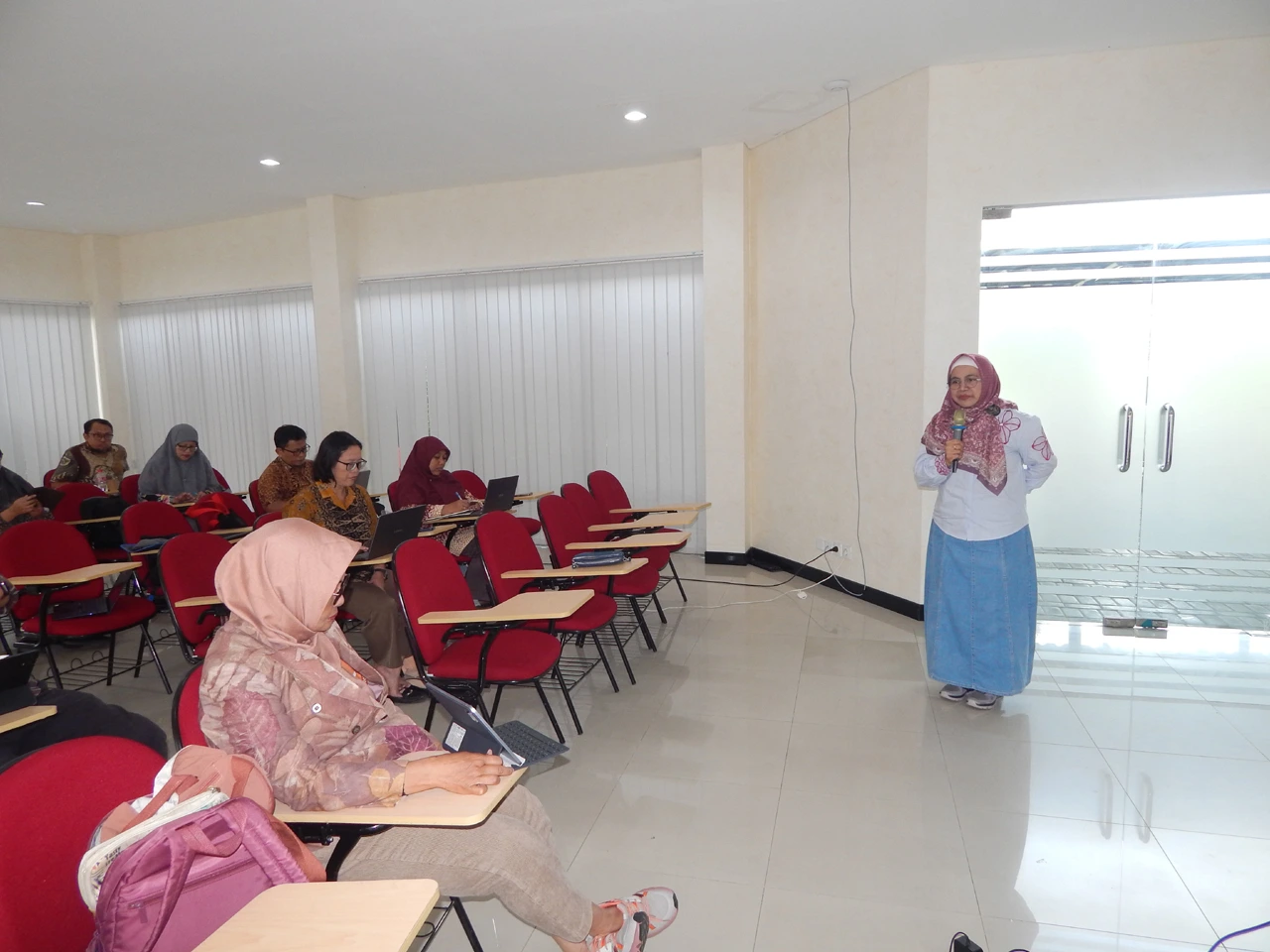
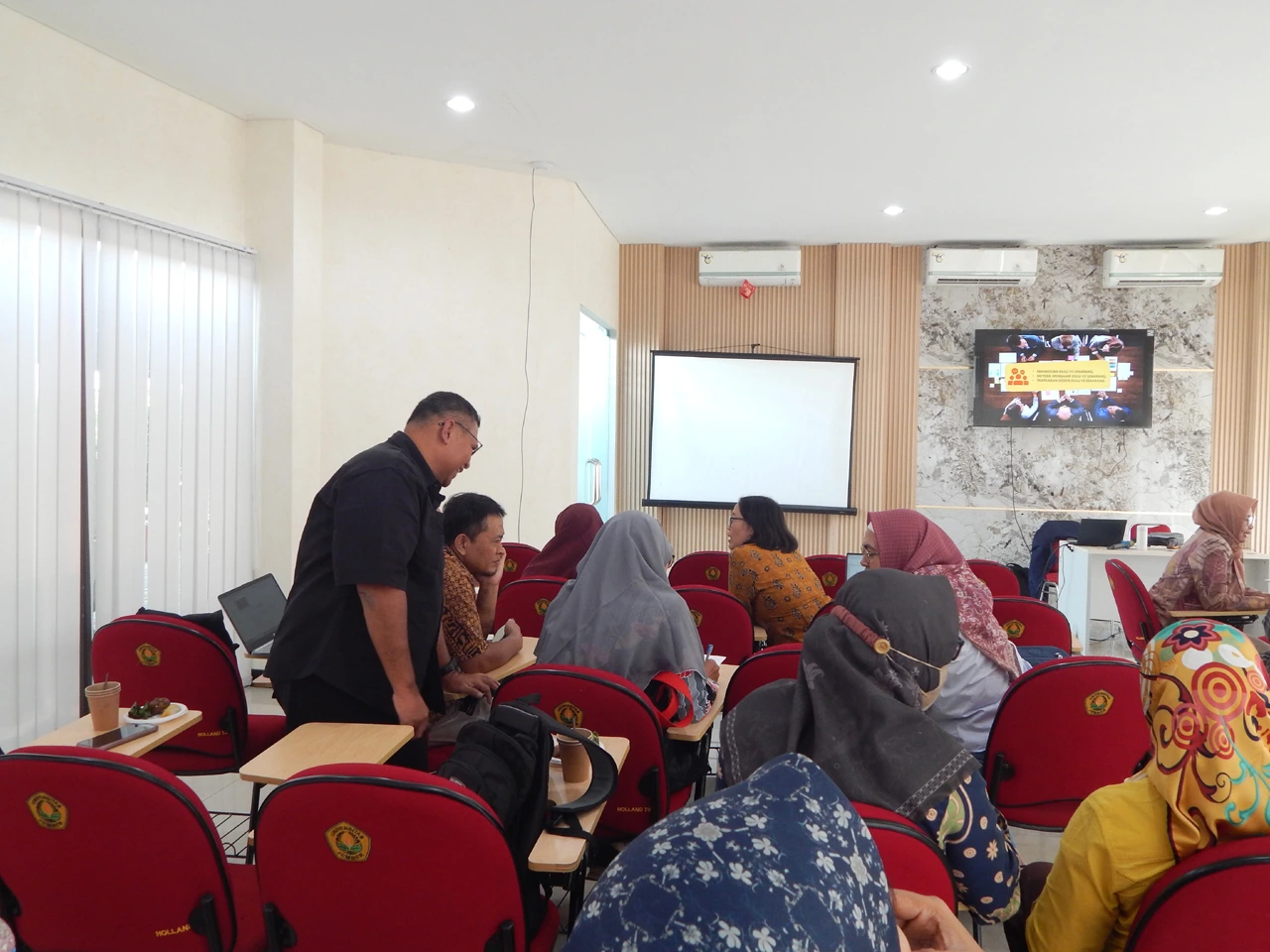
Interactions became more lively as participants were invited to discuss the importance of building effective communication and professional empathy in the workplace. Through video presentations and group simulations, participants were asked to share their views and solutions to various real-life situations in organizations and the professional world. Training participants were also encouraged to refresh by making a video walking around the Vocational Campus of Kember Jubung University. Through this activity, FMIPA UNEJ demonstrates its commitment to improving the capacity of human resources who are not only academically superior, but also ready to face global dynamics and developments in artificial intelligence-based technology.